Open Book of Art | Sweat stained with powder and dirt no longer, makeup technique of women in Tang Dynasty
Embroidered silk is not only a name of Tang silk, but also a title of Bai Juyi’s Tang poems. A few days ago, a new book entitled "Looking for Twinkle Silk: Bai Juyi’s Poems on Twinkle Silk and Silk in Tang Dynasty" was brought to Shanghai Book Fair in 2023 by Zhejiang Ancient Books Publishing House. Zhao Feng, the author of Looking for Silk, is an ancient silk scholar, honorary curator of China Silk Museum and professor of Zhejiang University. Starting from Bai Juyi’s poems and combining with more than 30 years’ thinking, he "weaved" this book about brocade in one weft. This article is authorized to be selected from this book.
Sweat stained with powder and dirt is no longer there, and there is no pity in dragging the soil and stepping on the mud.
The "sweat stained with powder" on the dance clothes is because the makeup of women in the Tang Dynasty was very strong. This kind of heavy makeup will fall off when dancing, and it will also stain the dazzling silk dance clothes. When the dancers take off their makeup after dancing, a lot of makeup materials will be washed down. Eighty in Wang Jian’s Gong Ci describes the situation of maids after dancing;
The dance was sweaty, and the people upstairs helped the jade ladder. Go back to the hospital and wash your face again, and pour silver mud into the golden flowerpot.
So what exactly is the cosmetic powder here? In the history of Emperor Xuanzong of Tang Dynasty, "I gave my aunts millions of dollars as a powder fee", and Tang Xuanzong gave 100,000 yuan to the three ladies of Korea, Guo and Qin every month as a powder fee.
Let’s review the makeup fashion and makeup techniques of that year.
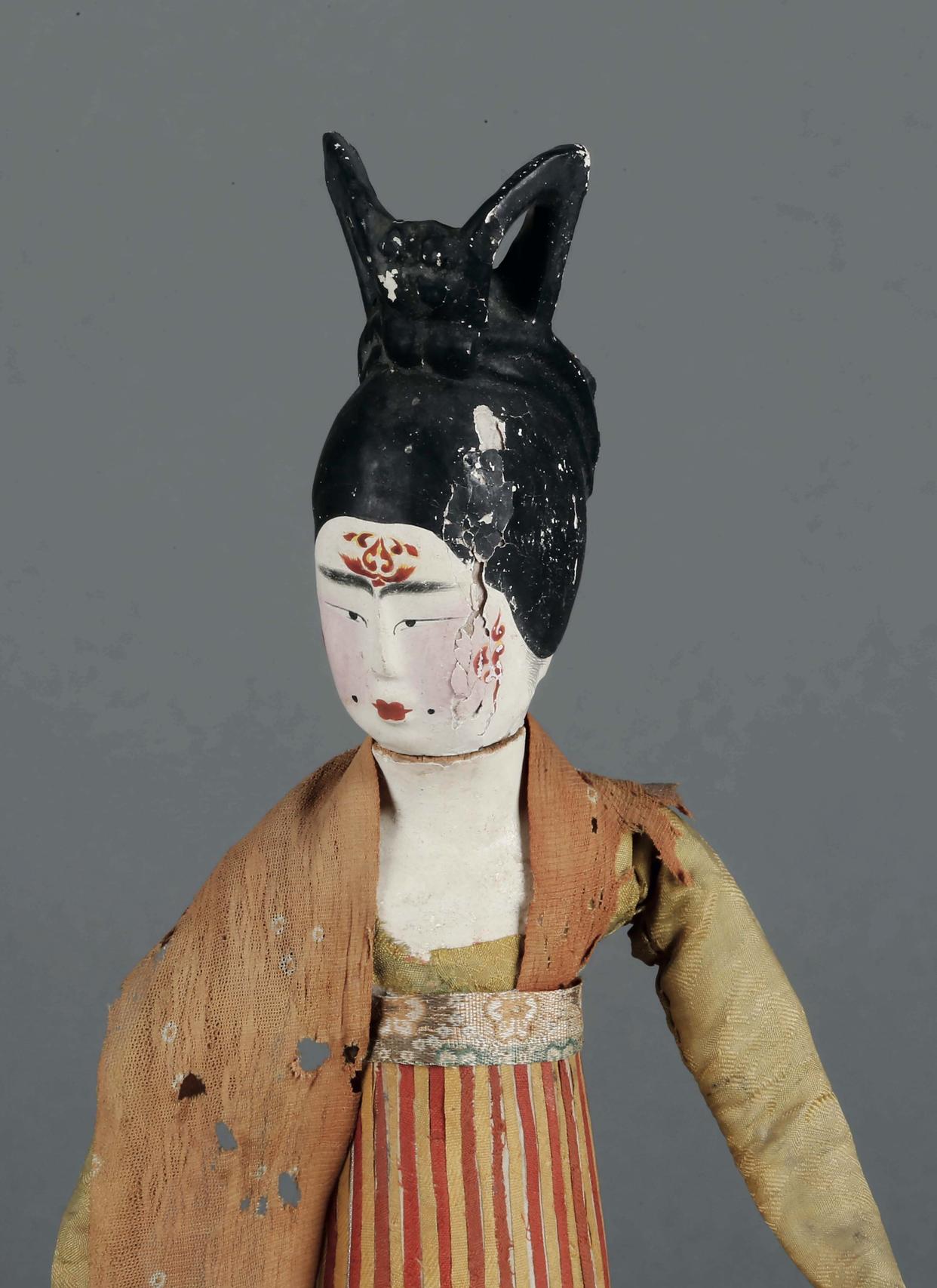
Turpan Tang Nv figurines
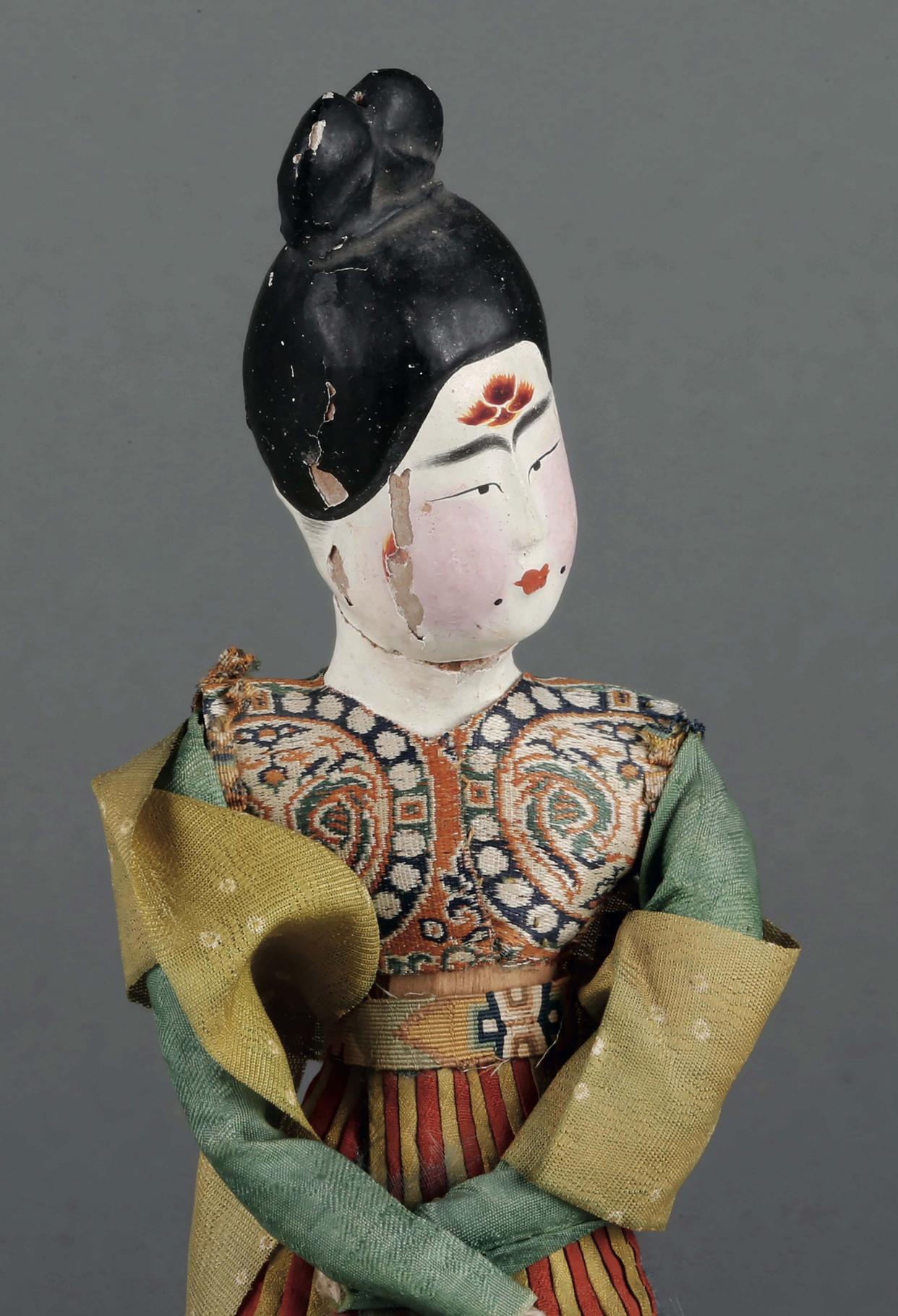
Turpan Tang Nv figurines
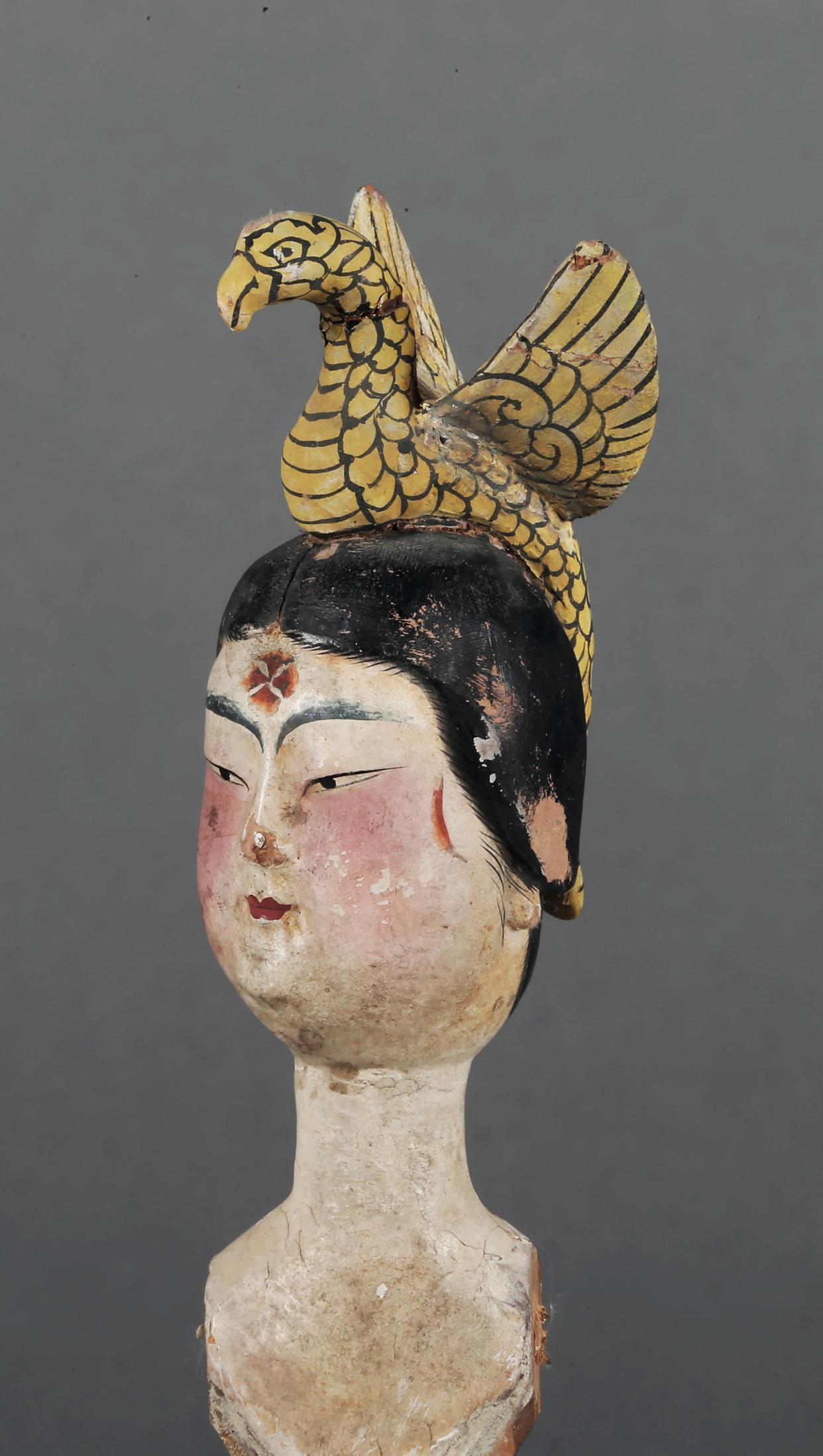
Turpan Tang Nv figurines
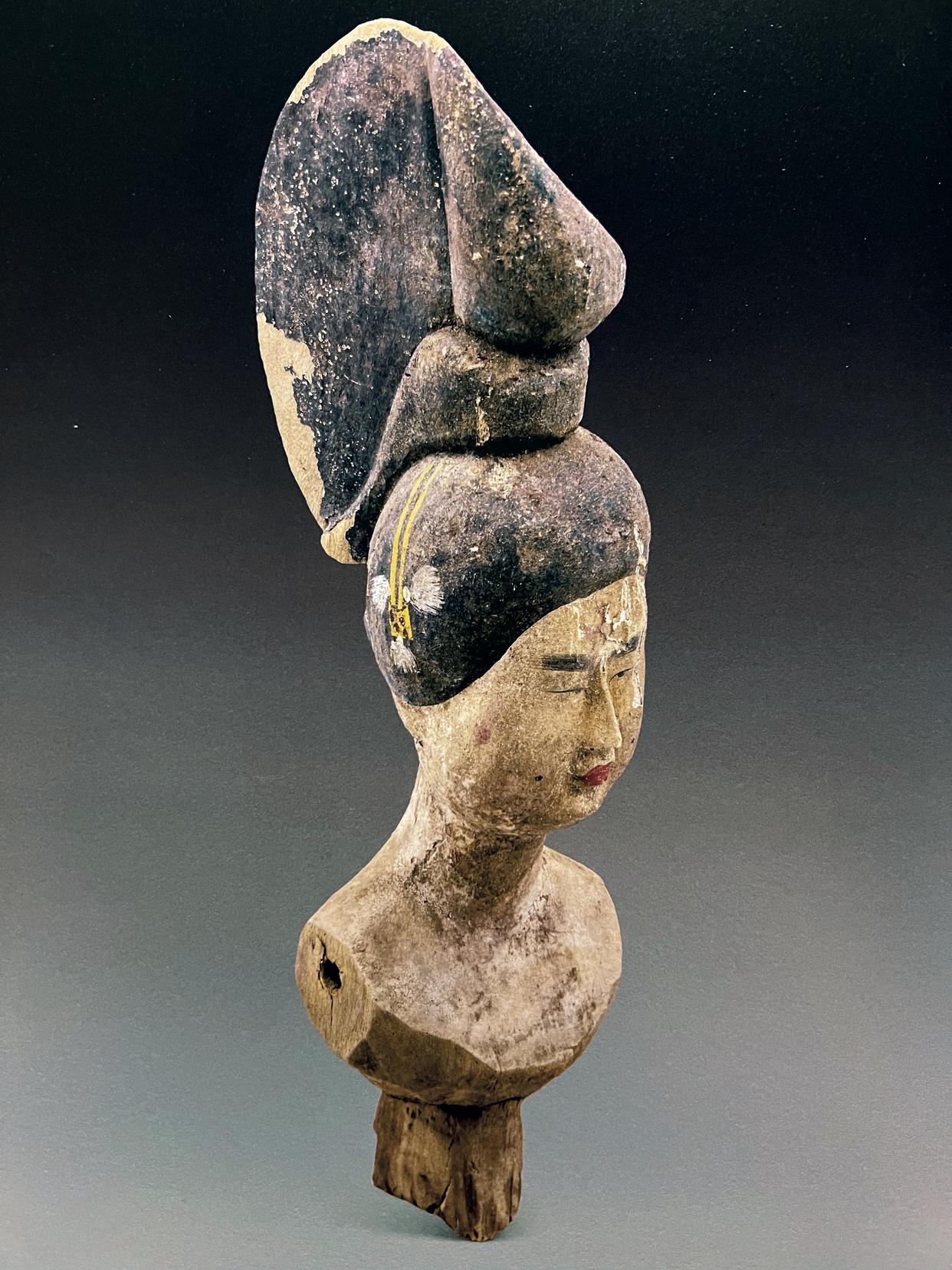
Turpan Tang Nv figurinesFirst, the contemporary makeup of the Tang DynastyThe most important poem describing women’s make-up in Tang Dynasty is "Contemporary Makeup" written by Bai Juyi in fifty allegorical poems;
Contemporary makeup, contemporary makeup, comes from the city and spreads everywhere. There is no distance in fashion, and there is no powder on the cheeks. The black paste is like mud on the lips, and the double eyebrow painting is low. Yan Huan lost her original state in black and white, and her makeup looked like a sad cry. The round enamel is not like a bun piled on the temples, and it is inclined to be red and not dizzy. Yesterday, I heard that I was sent to Yichuan, and Xin had insight and knowledge. Yuanhe makeup comb jun remembers that the face of the bun is not Chinese style.
The "make-up" of contemporary makeup means to decorate, dress up and decorate, which is generally called make-up. It can be the process of make-up, the articles of make-up, or the style or style of make-up. Women’s pursuit of fashion in the Tang Dynasty is all-round, and they are very particular about hair, eyebrows, lips, chest and clothes, but here we mainly pay attention to facial makeup on the body surface.
The Tang Dynasty is a fashionable era, and fashion always changes with time. Therefore, fashionable makeup is a very fashionable makeup bundle in a certain period of time. In fact, the contemporary makeup in the Tang Dynasty existed in different time periods. Bai Juyi wrote in the poem "The White-haired Man in Shangyang" about the contemporary makeup in the last years of Tianbao, which has been laughed at several years later:
Small-headed shoes and narrow clothes, and indigo eyebrows are slender. Outsiders should laugh when they don’t see it.
All fashions start from political, economic and cultural centers. In the Book of the Later Han Dynasty, there is a proverb in Chang ‘an: "The bun in the city is so high that the square is one foot high. The city is full of eyebrows, square and half forehead. There are big sleeves in the city, and all the squares are covered with silks. " The city here is where the royal family is and where fashion begins. The same is true of fashion in the Tang Dynasty, which started from Chang ‘an. When Bai Juyi wrote "Contemporary Makeup", it was also "spread from the city".
However, the contemporary makeup written by Bai Juyi in the fourth year of Yuanhe (809) was actually a fashion that began to be popular in the middle and late Zhenyuan (about 795) and gradually disappeared in the last year of Yuanhe (820). People called it "Yuanhe makeup", which was actually a fashion of Hu Hua, with many different makeup styles from China, so it was criticized by Bai Juyi and others.
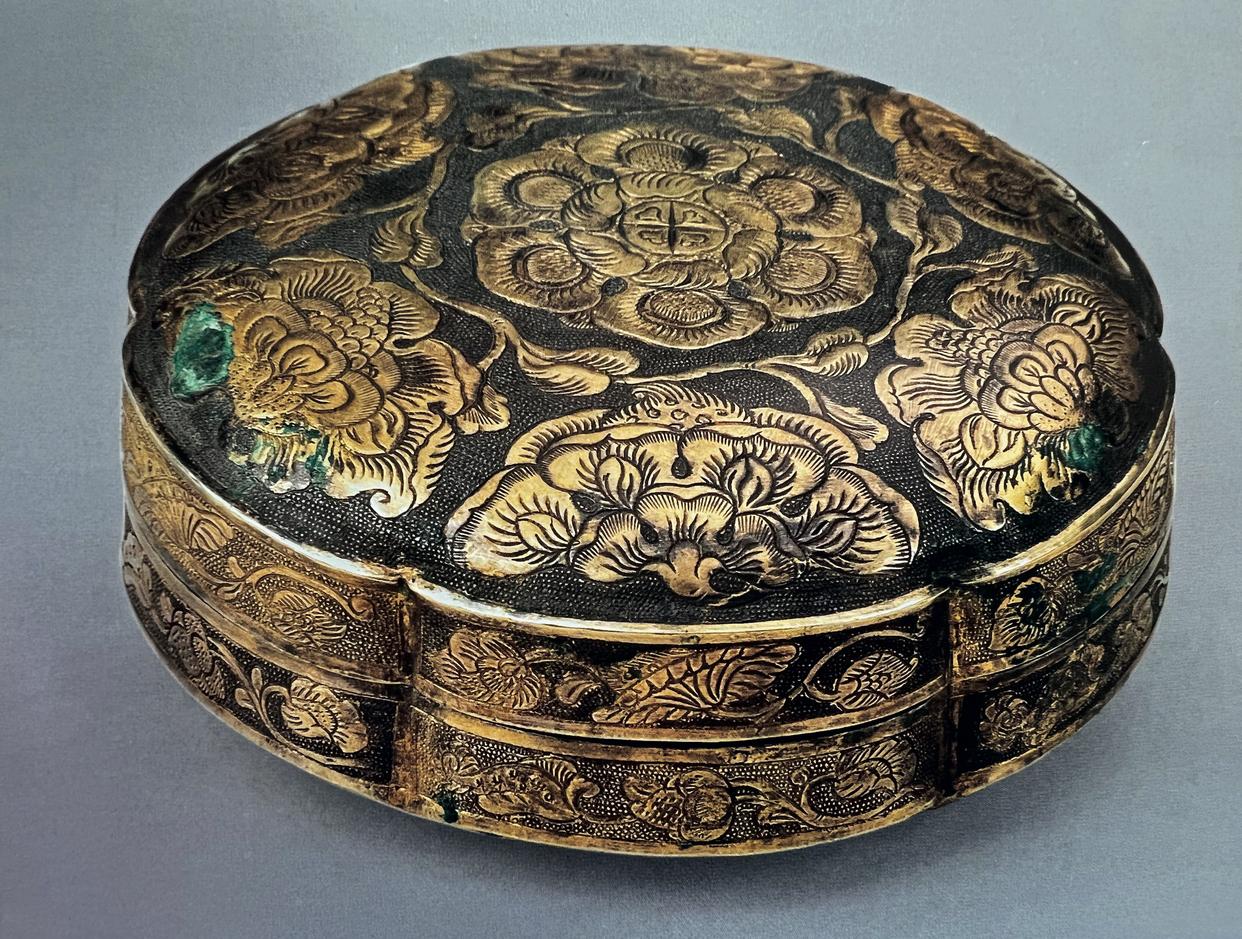
Gold-plated silver casket
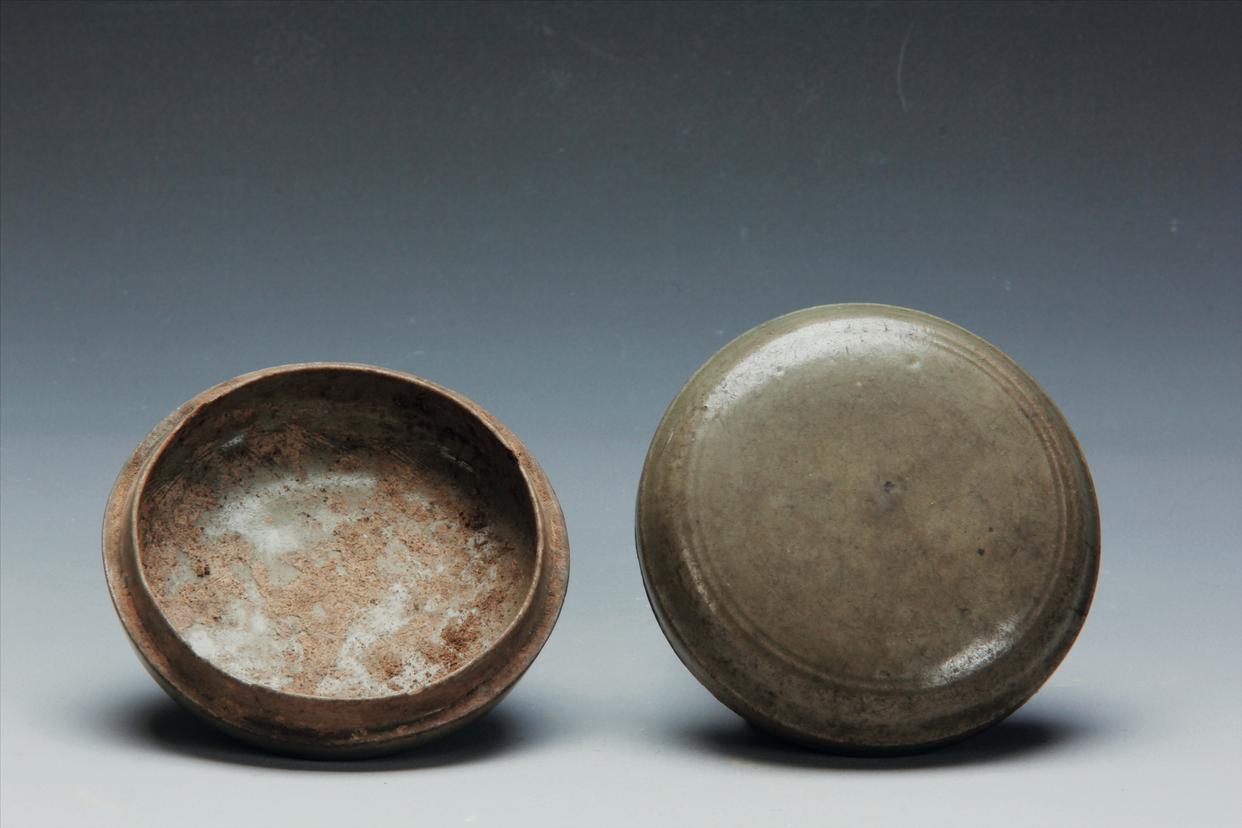
Glazed pottery powder box is first of all a face makeup, "no ink on the cheeks, no powder on the face" and "inclined red and not dizzy". These face makeup is quite different from the traditional female makeup habits. In ancient China, women regarded white as beauty and ruddy complexion, so they paid attention to painting with rich powder. This fashion of makeup became more popular in the Tang Dynasty. From the paintings handed down from generation to generation, we can see that most women in the Tang Dynasty wore heavy makeup and used more powder and rouge. However, in Yuanhe makeup, women advocate not applying powder, but showing people with "ochre face". "The Biography of Tubo in the New Tang Dynasty": "(Tubo) is better dressed than felt, and it is better to paint with ochre." The relationship between the Tang Dynasty and Tubo has always been tense, but there are still many contacts, and there is no doubt that it was spread from Tubo with the fashion of ochre painting. In recent years, a number of colorful wooden paintings have been unearthed in the Tubo tombs excavated in Golimu, Qinghai, and important murals have also been found in the Wulan aristocratic tombs, which reproduce the popular "ochre noodles" of Tubo in the 8th century. This kind of "ochre face" makeup is mainly painted with red color on the protruding parts of the face such as forehead, nose, chin and cheeks, which is round and round, and its characteristics are very obvious.
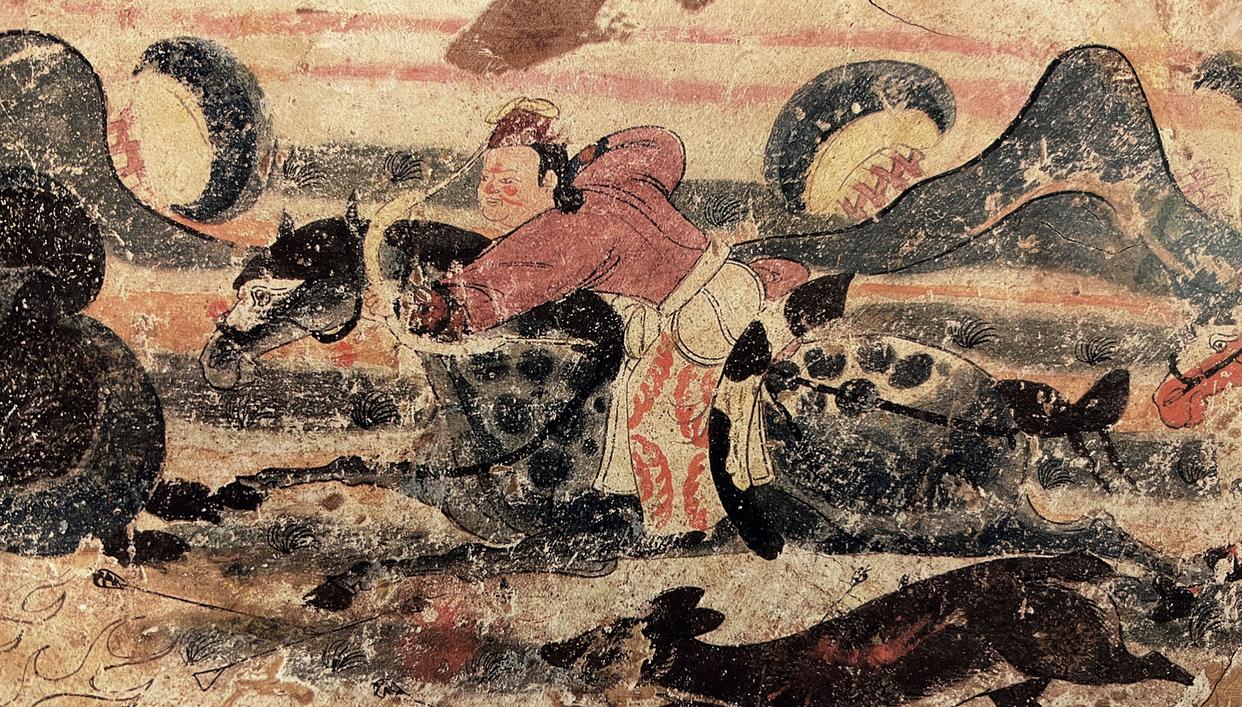
The coffin board is painted with ochre figures.
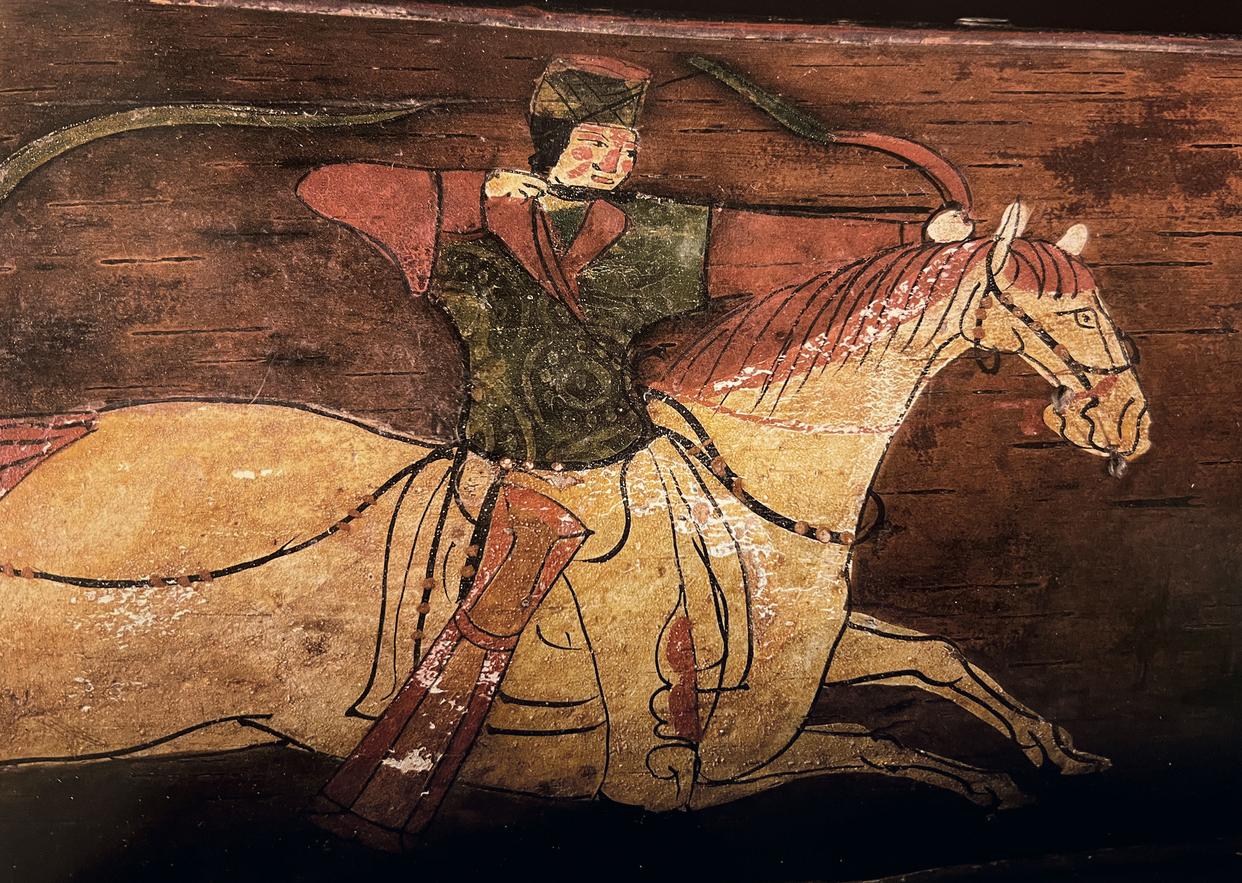
Hu painted ochre figures, followed by lip makeup. In traditional women’s aesthetic concept, red lips are beautiful, just as Cen Can said in "Drunken Douzi Beauty" that "red lips are a little peach blossom". When women in the Tang dynasty painted their faces with powder, they often painted their lips white, so that they could point out various styles at will, especially the petite and red cherry mouth. However, Yuanhe makeup is based on "black paste filling lips like mud". It is difficult to verify when and where this lip decoration method originated. But what is certain is that there was black lip makeup in the Tang Dynasty, and this kind of makeup was still seen in the Song Dynasty.The third is Boyi. Yuan Zhen’s "Narrating Poems to Send Music to Heaven" narrates the colorful poem creation cloud in Zhenyuan: "There are people who are educated by doing things, and women in modern times are dizzy with eyebrows, and their clothes are wide and matched with colors, especially the drama is strange." Since women’s ornaments are put forward in particular, it can be seen that the wind of change has started. Bai Juyi’s "A Hundred Rhymes of Sleepwalking Poems in Spring": "The wind is thin and the makeup is wide." One of the characteristics of Yuanhe makeup is a broad blouse. In fact, Bai Juyi’s "dragging the soil and stepping on the mud" in the poem "Twilight" refers to the generosity of the dance clothes, so it will drag the soil and step on the mud.
From the above, it can be seen that the makeup described in "Contemporary Makeup" actually violates the general aesthetic standards of traditional women in China, and even runs in the opposite direction, breaking the aesthetic habits of white and white, white teeth and red lips, but integrating various makeup habits of Han and Hu. Therefore, Bai Juyi sighed at the end of the article that "the face of the bun is not Chinese style".
Second, the style of makeup
However, Yuanhe makeup is only a popular stage, and the mainstream of fashion in Tang Dynasty is not only Yuanhe makeup. In China’s traditional aesthetic view of women, the beauty of women is characterized by the beauty of a moth’s eyebrows, red lips and white teeth, and a peach-blossom face. Especially in the works of China literati, the description of female beauty is almost the same ideal model. Yuan Zhen’s Hate Makeup depicts the detailed process of a woman’s makeup:
Wear a gap at dawn, open the curtain and make up. Fu powder is expensive, Shi Zhu pity Ran Ran. The back is soft and the forehead is drooping, and the cluster of temples is gathered with the hairpin. Coagulation Cui dizzy moth eyebrows, light red brush painted face. With a small comb all over your head, apply round cymbals to your face. I hate wearing makeup when the flowers fall.
According to the contents of the poem, this woman’s face makeup includes several steps, such as applying lead powder, applying rouge, drawing eyebrows, applying applique, and painting face. Even if no one appreciates the makeup, every detail should be described in detail, which shows that women in the Tang Dynasty attach importance to makeup. Facial makeup can be divided into facial makeup, eyebrow makeup, lip makeup and flower makeup, and there are different fashions in different periods.
1. Face makeup and makeup style
Face makeup is an important part of women’s makeup, which can be divided into white makeup, red makeup, forehead yellow and so on.
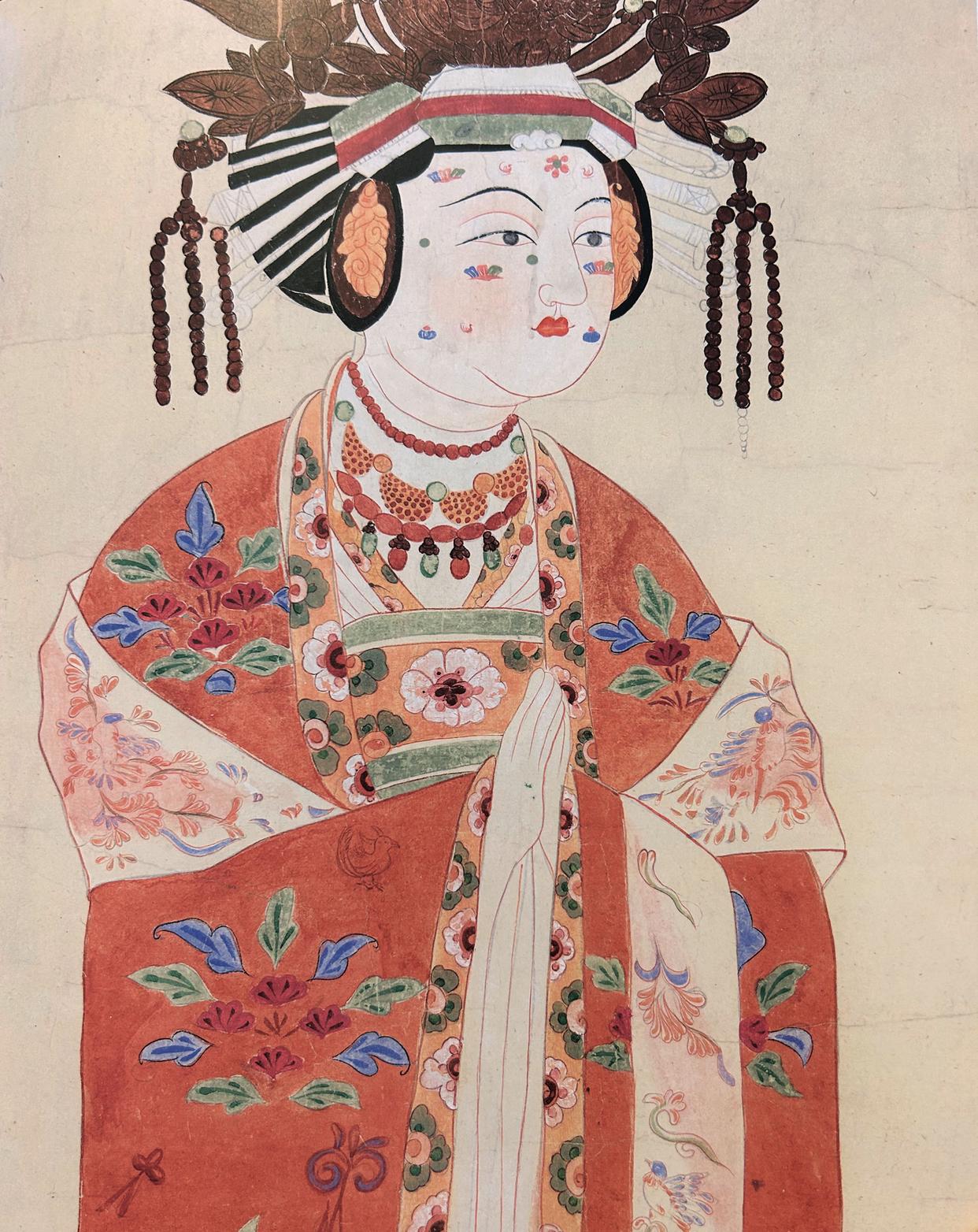
Dunhuang white makeup is also called Fu powder, that is, only lead powder is used instead of rouge makeup. Applying white powder to the face, neck and chest that needs to be exposed when wearing yarn can make the skin crystal clear as snow and avoid heavy makeup. Du Mu’s poem "The river is clear and slippery, and the daughter is as white as fat." In the meantime, Du Qiu, no pains, Zhu Fenshi "is the transparent makeup effect brought by white makeup." Fu powder not only makes the skin white, but also conceals wrinkles and makes the face look young. "The Book of the New Tang Dynasty is the Biography of Tianwu": "Although the Queen Mother is high in the spring and autumn, she is good at painting herself, although she does not realize her decline."Red makeup is the most common and widespread makeup of ancient women’s face makeup in China. Any makeup style that makes the face glow with rouge can be called red makeup. In "The Legacy of Kaiyuan Tianbao", Yang Guifei’s face looks like a peach blossom when she uses red rouge: "Every time the imperial concubine goes to Xia Yue, she often wears light clothes, which makes the attendants blow, but she still can’t understand its heat. Every time there is sweat, it is red and greasy and fragrant, or it is wiped on the towel, and its color is like pink. " Many poems such as Li Bai’s in golden sunshine her rosy robe is dyed, Cui Hao’s "Red Makeup on the Color Screen", Wang Changling’s "Red Makeup on the Brothel" and Chang Jian’s "Red Makeup on the Sun, Leaning on the Spring" also use red makeup to describe women’s makeup. But under the subdivision, it can also be divided into drunken makeup (also known as "drunken makeup", which is the most colorful makeup in red makeup), peach blossom makeup, Feixia makeup, sandalwood makeup and so on according to different occasions.
Frontal yellow is to apply yellow powder on the forehead, which can also be regarded as a kind of facial makeup. Although this method began in the Southern and Northern Dynasties, it was popular in the Tang Dynasty. Wu Rong’s words such as "the eyebrows are all green, and the forehead is half yellow", Pei Qian’s "half forehead is slightly yellow" and Wen Tingyun’s "yellow forehead is light for dust" are all descriptions of it.
2. Eyebrow makeup and eyebrow style
Zhu Qingyu, a poet, used "the depth of thrush is out of date" to ask for directions, indicating that the Tang Dynasty attached great importance to eyebrow makeup. Daimei and Cuimei refer to the color of eyebrows. Eyebrows are originally black, so you can continue to paint them dark and dark, and at the same time you can dye them emerald green. In Tang poetry, such sentences as Wan Chu’s "Mei Dai captures the color of the general’s day lily" and Lu Lun’s "Deep suppression of the scarlet string and low eyebrows" can be taken as examples.
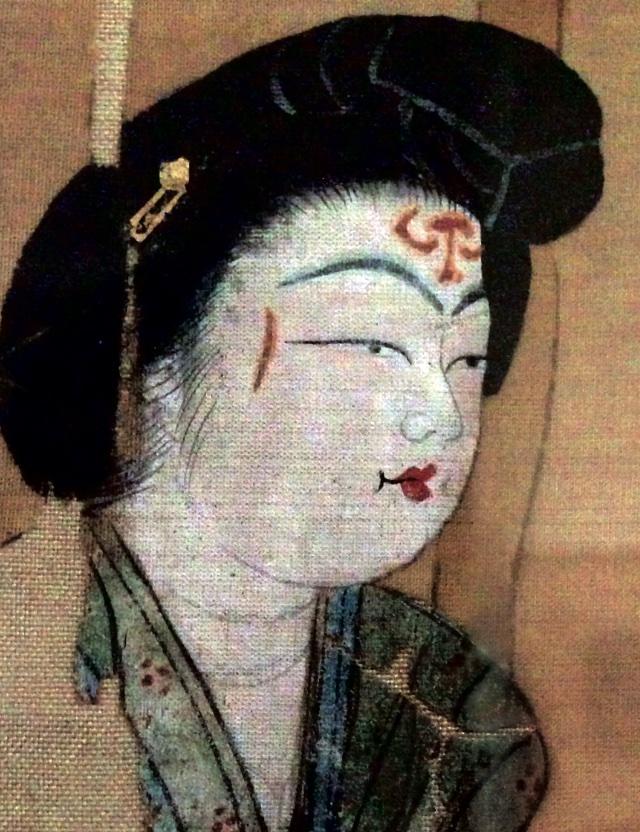
Female makeup in Tang dynasty
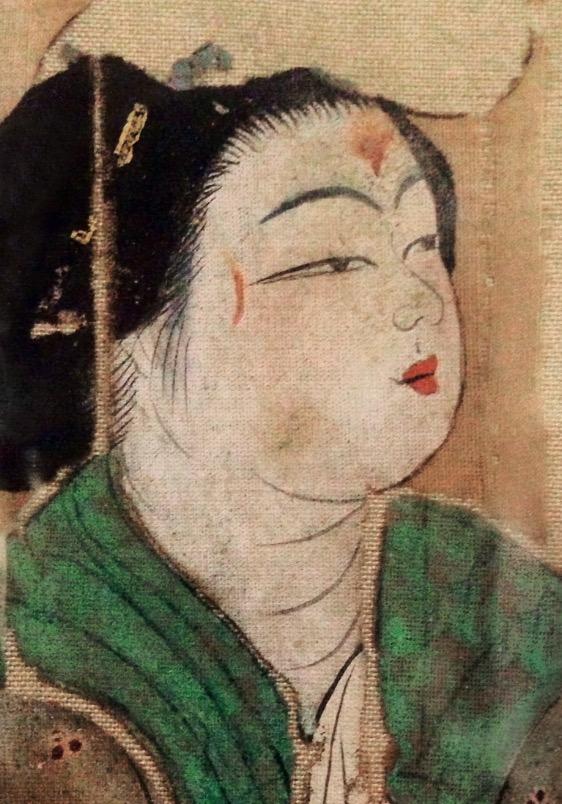
Female makeup in Tang dynasty
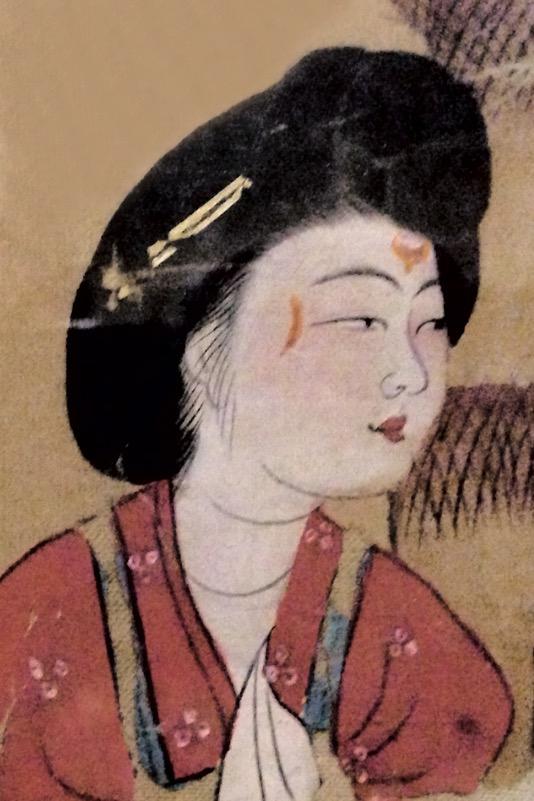
Female makeup in Tang dynasty
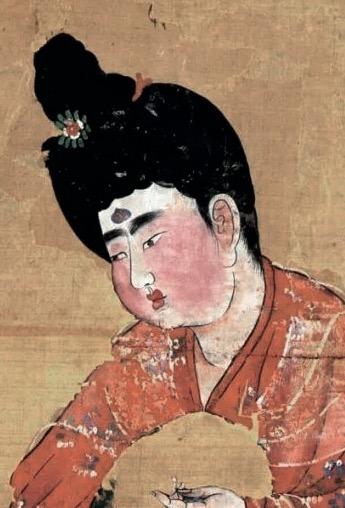
There are also many eyebrows in the makeup of women in the Tang Dynasty, but they are generally divided into thin eyebrows and wide eyebrows. The former is described in Lu Zhaolin’s Ancient Meaning of Chang ‘an, "The crow is yellow on the first moon", Bai Juyi’s "The White-haired Man in Shangyang", "The brow of indigo is slender", Wen Tingyun’s "Nan Gezi" and "Lianjuan carefully sweeps the eyebrows". In the prosperous Tang Dynasty, the broad eyebrows began to shorten, and Mei Fei of Xuanzong had a saying that "the laurel leaves are not painted for a long time". Later, Li He’s poems repeatedly said that "the new laurel leaves are like moths" and "the eyebrows are thick with laurel leaves". The special names of eyebrows in Tang Dynasty include:Willow eyebrows, slightly curved at the peak of eyebrows, are long and slender. As Bai Juyi said, "people say that willow leaves are like a frown, and they are more worried like willow silk", so it is named because it looks like willow leaves. Han Wo’s "Peach Blossom Face is too thin to hide tears, willow eyebrows are too long to feel sad", and Li Shangyin’s "Willow eyebrows are too empty to spit, and elm pods are still flying to buy money" can also be seen that poets in the Tang Dynasty love and are familiar with them.
Mountain eyebrows, similar to willow eyebrows, but slightly lighter in color. Wei Zhuang’s "a pair of distant eyebrows, unable to bear to be more thoughtful" and Ouyang Jiong’s "painting distant eyebrows in the mirror, unable to sleep in spring" may be evidence.
Oblique moon eyebrow, also known as moon eyebrow, is named because it looks like a curved half moon. It is wider than the arch eyebrows and slightly shorter than the long eyebrows. During the Zhenguan period, the painter Yan Liben used this eyebrow gesture in his "Step-by-Step Map". Tang Zhangmi’s "The Story of the Decorative Building": "The Ming Emperor is lucky for Shu, and the painting work" Ten Eyebrows "is named after the horizontal clouds and the slanting moon." Du Mu’s "Juanjuan is full of eyebrows, but the new temples learn to fly like crows" is exactly this eyebrow style.
The eight-character eyebrow, that is, the eight-character eyebrow in Bai Juyi’s "Times Makeup", is characterized by short and drooping. Wei Yingwu’s "Seeing Imperial Concubine Into the Taoist Temple", "Then it is planned to stay in the Millennium, and the mirror will rest the figure of eight eyebrows", and Yong Yuzhi’s "Two slender figures of eight eyebrows, half white and half black lamp curtains" all refer to this eyebrow style. Because it forms an exotic "Yuanhe makeup" with black lips, ochre face and bun vertebrae, it is also called "crow makeup", so the eight-character eyebrow can also be called crow eyebrow. In Bai Juyi’s "A Hundred Rhymes of Poems on behalf of Books", there is a chant of "romantic boasting and falling, and the times are fighting and crowing".
3. Lip makeup and lip style
Lip makeup was found almost everywhere all the time, even in men and women in the Tang Dynasty. However, women’s oral fat is generally bright scarlet with strong coloring, which is used to change the lip color and shape the lip shape. For example, in Yuan Zhen’s Thirty Rhymes of Hui Zhen, "The eyebrows are often gathered with shame, and the lips are warmer and more harmonious", and Cen Can’s "The military song of Yumenguan Gai Jiangjun", "A pair of beautiful women are at leisure, and the lips and eyebrows are bright". However, there are also sandalwood lips, such as Qin Taoyu’s "Blowing the Shengge", "The sandalwood lips breathe the palace business reform, and the grievances are gradually refreshing." There are also black lips, which are the black ointment of Yuanhe makeup.
In addition to the materials of lip makeup, the style of lip makeup, that is, design, is more colorful, with many names, which is the most in the history of ancient makeup in China. According to Qing Yi Lu, the notes of Tao Gu in the Northern Song Dynasty, the lip makeup of women in the Tang Dynasty "is slightly rouge faint, pomegranate jiao, scarlet spring, scarlet spring, tender Wuxiang, Banbianjiao, tiger balm, holy sandalwood heart, dewdrop, Neijiayuan, Tiangong Qiao, Luo Er Yin, pale red heart, fishy and faint, Xiao Zhu, Long Ge, double Tang Mei, and Hua Jia Yuan.
4. make-up enamel and flower enamel
Makeup enamel is painted on the face, while flower enamel is pasted on the face.
The original meaning of makeup is a small pattern on the cheeks. Mr. Sun Ji thought that in the Han and Wei Dynasties, there was a makeup method of spotting red spots on cheeks, and at that time, he called this red spot "Jue". Interpretation of Names and Jewelry: "Note the face with Dan. Hey, it’s burning. " At first, there were two dots on the face. With the flourishing makeup in the Tang Dynasty, there were more styles, such as "money dots" shaped like coins, "flower cymbals" shaped like flowers, and noodles shaped like small fish and ducklings.
Oblique red is the most famous one, that is, rouge is used to draw a curved red line at the corner of a woman’s eyes on both sides. Oblique red is a scar makeup. According to "The Story of the Makeup Building", "When I first entered the Wei Palace at night, Emperor Wen sang under the lamp and blocked it with a seven-foot crystal screen. When the night comes, I don’t feel the touch screen, and the wound will be scattered like Xiaoxia. Naturally, the imperial secretary provides rouge and is named Xiaoxia makeup. " Luo Qiu’s poem "Bi Hong Er" has a sentence of "a touch of thick red and a slanting face". In addition, during the Changqing period in Tang Muzong (821-824), it was popular among women in Beijing to remove their eyebrows. "It is called’ blood-dizzy makeup’ when the three or four colors of Dan and Zi are horizontally above and below the eyes".
In addition, ochre makeup can also be regarded as a kind of makeup. This kind of facial makeup comes from Tubo, and it is an important feature of Yuanhe makeup by applying several ochre colors on the cheeks on both sides of the face, ranging from three, four and five.
Flower buds, also known as flower buds and flatterers, are applied to the eyebrows, which is what Liu Yuxi said in his poems. Mr. Sun Ji thinks that its origin is related to Buddhism, and this kind of dot may be the imitation of the Buddha statue. However, its position and shape are similar to those of flower buds, or it can be regarded as the predecessor of flower buds. It is not painted with pigment, but the cut pattern is attached to the forehead. In the Tang Dynasty, flower buds had various complicated shapes besides round shapes.
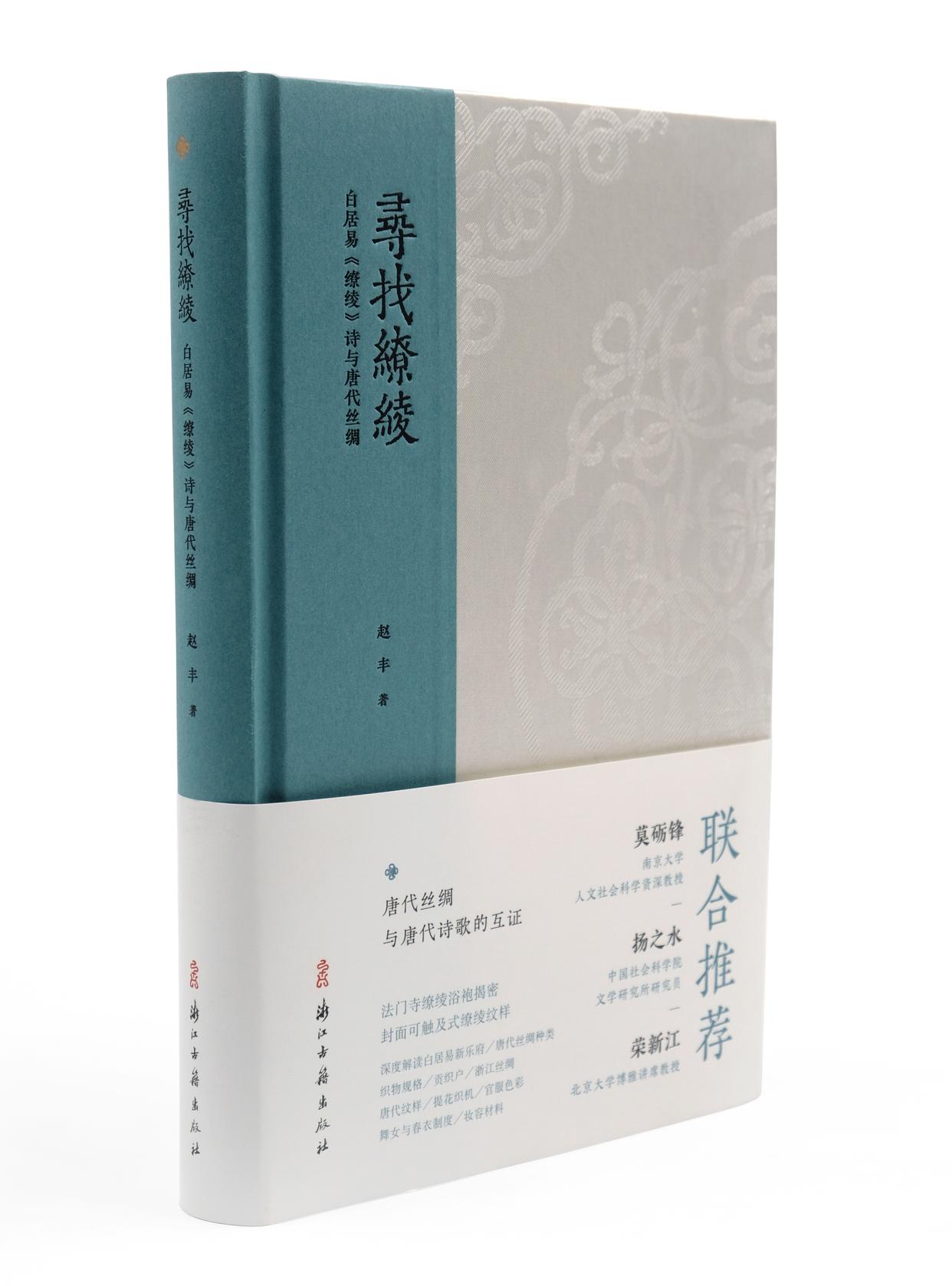
Zhao Feng, Zhejiang Ancient Books Publishing House (this article is from The Paper, please download the "The Paper" APP for more original information).
Reporting/feedback